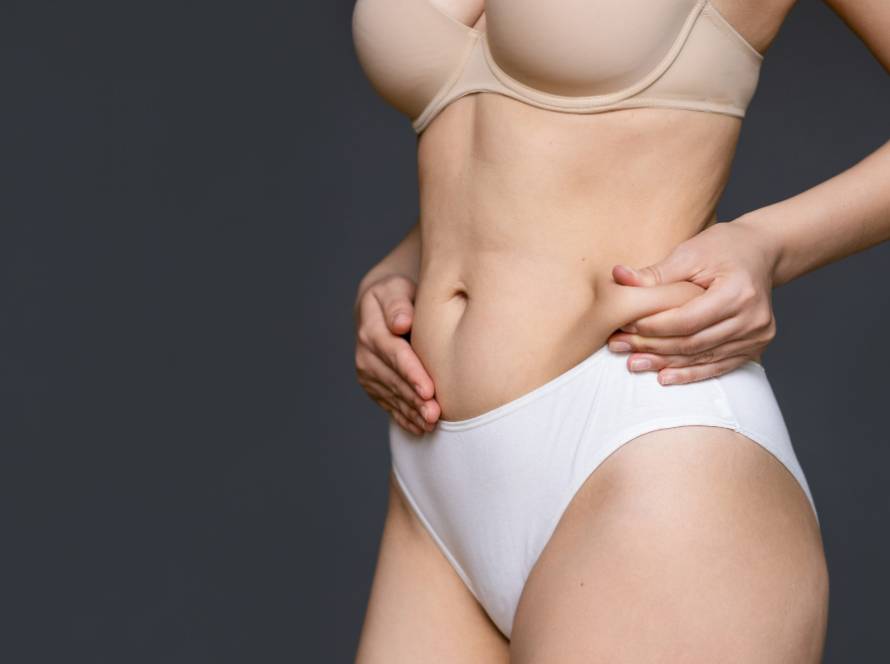
Regular exercise is one of the best ways to improve overall health, build muscle, and reduce body fat. However, many people discover that even after reaching their weight-loss goals, loose abdominal skin remains. This can be frustrating, especially for individuals who have worked hard through diet and exercise.
The reason is simple: exercise strengthens muscles and burns fat, but it cannot tighten excess skin that has lost its elasticity.
Understanding why this happens can help you determine the most appropriate options for improving your abdominal contour.
What Causes Loose Abdominal Skin?
The skin stretches to accommodate changes in body size over time.
Common causes include:
- Pregnancy
- Significant weight loss
- Aging
- Genetic factors
- Repeated weight fluctuations
When the skin is stretched for long periods, its structural fibers may become damaged, reducing its ability to retract.
The Role of Collagen and Elastin
Healthy skin relies on two important proteins:
- Collagen, which provides strength and structure.
- Elastin, which allows the skin to stretch and return to its original shape.
As we age—or after major stretching from pregnancy or obesity—the production and quality of these proteins decline.
Once collagen and elastin fibers are significantly damaged, the skin may no longer tighten on its own.
What Exercise Can Do
Exercise offers many benefits for abdominal appearance.
It can help:
- Build stronger abdominal muscles
- Reduce body fat
- Improve posture
- Increase muscle definition
- Support overall health
For individuals with mild skin laxity, these improvements may create a firmer appearance.
However, exercise does not remove excess skin.
Why Loose Skin Remains
After substantial weight loss or pregnancy, the amount of skin may simply exceed what the body can naturally retract.
Even with excellent muscle tone:
- The extra skin remains.
- Skin folds may persist.
- Stretch marks may still be visible.
- Abdominal contours may not reflect the underlying muscle definition.
This is why many physically fit individuals continue to experience loose abdominal skin.
Can Skin Tighten Naturally?
The answer depends on several factors.
Skin is more likely to retract if:
- Weight loss is gradual.
- The individual is younger.
- Skin elasticity is still good.
- The amount of excess skin is relatively small.
In cases of major weight loss or severe skin laxity, natural tightening is often limited.
When Is Abdominoplasty Considered?
For patients with significant excess skin, abdominoplasty (tummy tuck) may be considered.
This procedure can:
- Remove excess skin.
- Tighten weakened abdominal muscles when appropriate.
- Improve abdominal contour.
- Create a smoother midsection.
Unlike exercise, surgery addresses the excess skin directly.
A consultation with a board-certified plastic surgeon is necessary to determine whether abdominoplasty is appropriate for your situation.
The Importance of Weight Stability
Plastic surgeons generally recommend reaching a stable weight before considering body contouring surgery.
Weight stability helps:
- Improve surgical planning.
- Produce more predictable results.
- Reduce the likelihood of future changes to abdominal contours.
Maintaining healthy lifestyle habits remains important after surgery.
Can Non-Surgical Treatments Help?
Some non-surgical skin-tightening treatments may improve mild skin laxity by stimulating collagen production.
However, these treatments have limitations.
They generally cannot remove large amounts of excess skin or replace the results that may be achieved with abdominoplasty in patients with significant skin redundancy.
Your provider can recommend the most appropriate option based on your degree of skin laxity.
Maintaining Long-Term Results
Whether you pursue surgery or not, healthy habits remain essential.
Maintaining your results includes:
- Regular physical activity
- Balanced nutrition
- Stable body weight
- Adequate hydration
- Avoiding smoking, which can affect skin quality
These habits support both skin health and overall well-being.
Final Thoughts
Loose abdominal skin often persists because exercise improves muscles and reduces fat but cannot restore skin that has permanently lost its elasticity. Factors such as pregnancy, significant weight loss, aging, and genetics all contribute to skin laxity. For individuals with substantial excess skin, surgical body contouring may offer the most effective solution.
At VIVE Plastic Surgery, we provide personalized evaluations to help patients understand the causes of loose abdominal skin and explore treatment options that align with their anatomy and goals. Our experienced team is committed to achieving natural-looking results while prioritizing patient safety and long-term satisfaction.