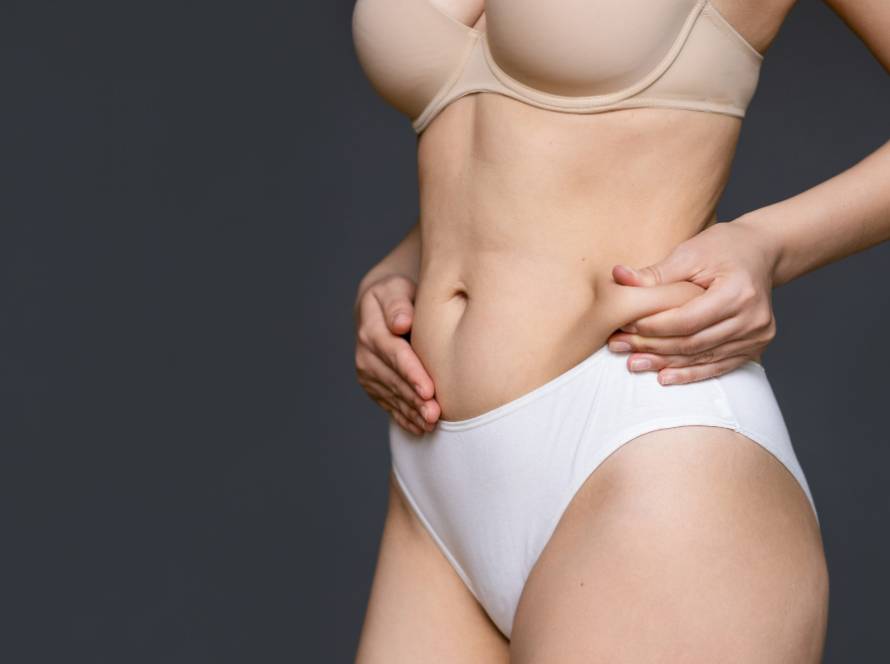
Abdominoplasty, commonly known as a tummy tuck, is a surgical procedure designed to remove excess abdominal skin and tighten underlying structures. While many patients focus on fat removal or muscle repair, one of the most important factors influencing surgical outcomes is often overlooked: skin elasticity.
Skin elasticity plays a key role in how the abdomen responds to surgery, how smoothly it heals, and how natural and long-lasting the final contour appears.
What Is Skin Elasticity?
Skin elasticity refers to the skin’s ability to:
- Stretch and return to its original shape
- Adapt to changes in body size
- Maintain firmness and tone over time
It is primarily determined by:
- Collagen content
- Elastin fibers
- Age
- Genetics
- Hormonal factors
- Pregnancy and weight fluctuations
High elasticity means the skin can retract more effectively after surgical tightening.
Why Skin Elasticity Matters in Abdominoplasty
During a tummy tuck, excess skin is removed and the remaining skin is redraped over the abdomen.
The quality of the skin determines:
- How smoothly it conforms to the new contour
- How natural the abdominal shape appears
- The tension required during closure
- The long-term stability of results
Patients with good elasticity generally experience more predictable and refined outcomes.
Low Skin Elasticity and Its Challenges
When skin elasticity is reduced, the skin has less ability to retract.
This can result in:
- Residual looseness
- Slower skin adaptation after surgery
- Higher tension on incision lines
- Increased likelihood of contour irregularities
In these cases, surgical planning often needs to be adjusted to account for reduced tissue responsiveness.
Factors That Reduce Skin Elasticity
Several factors can negatively affect skin elasticity over time:
- Aging
- Pregnancy
- Significant weight gain and loss cycles
- Sun exposure
- Smoking
- Genetic predisposition
These factors weaken collagen and elastin structures within the skin.
How Surgeons Evaluate Skin Elasticity
Before performing abdominoplasty, surgeons assess skin quality by evaluating:
- Degree of skin laxity
- Thickness of the skin layer
- Presence of stretch marks
- Tissue recoil when manipulated
- Overall abdominal contour
This evaluation helps determine the most appropriate surgical approach.
Skin Elasticity and Muscle Repair
In many tummy tuck procedures, the abdominal muscles are also tightened (rectus plication).
Skin elasticity influences how well:
- The skin adapts to a narrower waistline
- The abdominal surface remains smooth after muscle tightening
- The overall silhouette is maintained
Even with perfect muscle repair, poor skin elasticity can affect final contour quality.
Healing and Skin Retraction After Surgery
After abdominoplasty, the skin gradually adjusts to its new position.
In patients with good elasticity:
- Skin conforms more easily
- Swelling resolves more uniformly
- Final contour appears smoother
In patients with lower elasticity:
- Retraction is slower
- Mild irregularities may take longer to settle
- Compression garments play a more important role in shaping recovery
Can Skin Elasticity Be Improved?
While elasticity decreases naturally with age, certain factors can support skin health:
- Proper hydration
- Healthy nutrition (especially protein and vitamin C)
- Avoiding smoking
- Sun protection
- Stable weight maintenance
However, once elasticity is significantly reduced, surgical correction is often the most effective solution.
Why Elasticity Helps Predict Results
Skin elasticity is one of the best predictors of:
- Postoperative smoothness
- Scar tension
- Long-term contour stability
- Overall aesthetic outcome
This is why it is a critical part of preoperative planning.
Final Thoughts
Skin elasticity plays a central role in the success of abdominoplasty. It influences how the skin adapts to surgical changes, how smoothly the abdomen heals, and how natural the final result appears. While surgery can remove excess skin and tighten muscles, the biological quality of the skin itself remains a key determinant of the outcome.
At VIVE Plastic Surgery, every abdominoplasty is carefully planned based on individual skin quality, anatomy, and tissue behavior. Our approach prioritizes natural contouring and long-term stability, ensuring that each patient receives a personalized surgical plan tailored to their unique physiology.